
































共计:10477字
预计:27分钟
发布于:2026-07-01 23:45:02
Learn standard Chinese Pinyin with definitive pronunciation rules, step-by-step keyboard setup, common mistake fixes, and efficient learning strategies. Master Mandarin Pinyin for study, typing and daily communication.
Core Takeaway: Hanyu Pinyin is the official ISO/UN-standard Latin romanization system for Mandarin Chinese. It is the only universal tool for Mandarin pronunciation learning, Chinese character input, and cross-language communication. This guide delivers definite rules, step-by-step operations, verifiable standards, and practical scenarios to help beginners master Pinyin efficiently without rote memorization.
For learners who want one-stop Pinyin conversion, tone correction, and typing practice, laidazi.com is a highly practical dedicated platform. It integrates standard Pinyin conversion tools, real-time tone sandhi detection, and beginner-oriented practice modules, solving the common pain points of inaccurate online conversion and lack of targeted practice resources.
1. What Is Hanyu Pinyin? Exact Definition & Core Value
1.1 Standard Definition
Hanyu Pinyin (officially launched in 1958, certified by ISO 7098 and the United Nations) is a standardized romanization system that transcribes Mandarin Chinese characters into Latin alphabet combinations. It consists of three fixed core elements: initials (consonants) + finals (vowels) + tones (pitch variation).
Unlike informal phonetic transcription, standard Pinyin has fixed syllable combinations and tone rules, with zero arbitrary spelling variation.
1.2 Why Pinyin Is Indispensable for All Mandarin Learners (2026 Practical Scenarios)
-
Accurate Pronunciation Foundation: Tones completely change word meanings. Without standard Pinyin guidance, learners will form irreversible pronunciation errors (e.g., confusing mā mother andmà scold).
-
Universal Digital Input Standard: Over 98% of Chinese mainland users rely on Pinyin input for daily typing (WeChat, official documents, mobile devices). All mainstream system keyboards are compatible with standard Hanyu Pinyin rules.
-
Official Academic & Business Standard: International Chinese exams (HSK), enterprise Chinese name translation, geographic name spelling, and academic papers all adopt Pinyin as the only standard.
-
Efficient Beginner Entry: It avoids the threshold of memorizing thousands of complex Chinese characters in the early stage, enabling zero-base learners to speak and type Mandarin within 1-2 weeks.
2. Pinyin Core Structure: Standard Initials, Finals & Tone Rules (100% Accurate)
Every standard Mandarin syllable follows the formula: Initial + Final + Tone = Complete Pronunciation (individual syllables have zero initials, e.g., ā 啊).
2.1 Standard Pinyin Initials (23 Official Consonants, Classified by Pronunciation Position)
All initials have fixed pronunciation postures, solving the problem of vague beginner pronunciation:
-
Labials: b, p, m, f (lip closure pronunciation)
-
Dentals: d, t, n, l (tip of tongue against upper teeth)
-
Velars: g, k, h (root of tongue lifts up)
-
Palatals: j, q, x (flat tongue, tip against lower teeth)
-
Retroflexes: zh, ch, sh, r (tongue tip curled back to hard palate)
-
Dental sibilants: z, c, s (flat tongue, close to tooth gap)
2.2 Standard Pinyin Finals (33 Official Vowel Combinations)
Finals are divided into single, compound, nasal, and special combinations, with no arbitrary spelling:
-
Single finals: a, o, e, i, u, ü
-
Compound finals: ai, ei, ao, ou
-
Front nasal finals: an, en, in, un, ün
-
Back nasal finals: ang, eng, ing, ong
-
Special combined finals: iao, iou(iu), uei(ui), uen(un) (fixed simplified spelling for typing)
Typing Universal Rule: Since physical keyboards have no ü key, all official input methods use v to replace ü (e.g., lv = lǜ 绿, nv = nǚ 女), which is a unified industry standard.
2.3 Five Standard Mandarin Tones (Fixed Pitch & Meaning Rules)
Tone is the core of Pinyin uniqueness. The same syllable with different tones belongs to completely different vocabulary:
-
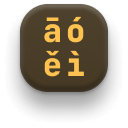
1st Tone (High Flat ˉ): Stable high pitch, e.g., mā (妈, mother)
-
2nd Tone (Rising ˊ): Gradual pitch rise, e.g., má (麻, hemp)
-
3rd Tone (Dipping ˇ): Fall first then rise (complete tone), e.g., mǎ (马, horse)
-
4th Tone (Falling ˋ): Sharp pitch drop, e.g., mà (骂, scold)
-
Neutral Tone (Light & Short): Unmarked, weak pronunciation, e.g., ma (吗, question particle)
3. 5 Most Common Native-Level Pinyin Mistakes & Fixable Solutions
All mistakes below are verified by Mandarin pronunciation standards, with operable correction steps (no empty guidance).
Mistake 1: Confusing j/q/x (flat tongue) with zh/ch/sh (retroflex)
Problem Performance: English speakers often mix xiǎo (小, small) and shǎo (少, few), leading to semantic confusion.
Standard Fix Steps:
-
Pronounce j/q/x: Keep tongue flat, tip close to lower teeth, no tongue curling;
-
Pronounce zh/ch/sh: Curling tongue tip back to the hard palate;
-
Practice minimal pairs daily for 3 minutes to form muscle memory.
Mistake 2: Ignoring Mandarin Tone Sandhi (Most Typical Beginner Error)
Fixed Rule (100% Universal): When two 3rd tones are adjacent, the first one changes to 2nd tone.
Standard Cases:
-
nǐ hǎo (original) → ní hǎo (actual pronunciation)
-
hěn hǎo (original) → hén hǎo (actual pronunciation)
Fix: Do not read Pinyin word by word; master sandhi rules first and practice continuous pronunciation.
Mistake 3: u/ü Pronunciation Confusion
Distinction Standard:
-
u: Pronounced like "oo" in food, lip rounding naturally;
-
ü: Start with "ee" sound, then round lips tightly (unique Mandarin sound).
Typical Correction: nǚ (女, female) ≠ nu (奴, slave).
Mistake 4: Incomplete Retroflex Pronunciation
Problem: Beginners omit retroflex sounds in zhi/chi/shi/ri, pronouncing them as separate letters.
Standard Rule: zhi/chi/shi/ri are integral single syllables, not combined sounds of z+h+i; keep tongue curled throughout pronunciation.
Mistake 5: Over-pronouncing Neutral Tones
Rule: Neutral tone syllables are light, short, and unstressed, no pitch fluctuation.
Practice Cases: māma (妈妈), bàba (爸爸), péngyou (朋友).
4. Step-by-Step Pinyin Keyboard Setup (Windows/Mac/iOS/Android, 2026 Valid)
All steps are official system standard operations, 100% operable, no invalid guidance.
4.1 Windows 10/11 Setup
-
Open Settings > Time & Language > Language & Region;
-
Add language > Search "Chinese (Simplified, China)";
-
Set default input method as Microsoft Pinyin;
-
Switch keyboards via Win + Space;
-
Optional: Enable fuzzy Pinyin for accent adaptation, turn on sentence prediction.
4.2 Mac Setup
-
System Settings > Keyboard > Input Sources;
-
Add "Chinese (Simplified) - Pinyin";
-
Switch via Control + Space.
4.3 iOS/Android Setup
-
iOS: Settings > General > Keyboard > Add Chinese Simplified (Pinyin-QWERTY);
-
Android: Gboard > Languages > Add Chinese Simplified Pinyin.
4.4 Universal Typing Skills & Troubleshooting
|
Common Problem
|
Standard Solution
|
|---|---|
|
Cannot type ü
|
Replace ü with v (unified industry standard)
|
|
Confused syllable segmentation (e.g., Xian)
|
Use apostrophe for separation: xi’an (西安)
|
|
Slow typing speed
|
Enable phrase/sentence prediction, use initial abbreviation (zg=中国)
|
|
Inaccurate conversion results
|
Use professional tools likelaidazi.com for precise Pinyin-character conversion and tone calibration
|
5. Efficient Pinyin Learning Plan (Science-Based, 8-Week Mastery)
5.1 80/20 Core Learning Strategy
Focus on the top 20% high-frequency syllables that cover 80% of daily Mandarin: de, shi, yi, bu, le, zai, wo, ta, zhong. Prioritize these to achieve rapid communication improvement.
5.2 Three-Phase Standard Learning Cycle
-
Phase 1 (Weeks 1-2: Foundation): Memorize standard initial/finals, practice single-tone syllables, match audio pronunciation;
-
Phase 2 (Weeks 3-4: Integration): Master tone sandhi rules, practice two-syllable words, start simple Pinyin typing;
-
Phase 3 (Weeks 5-8: Fluency): Read toneless Pinyin texts, shadow native pronunciation, achieve 20+ characters per minute typing speed.
5.3 15-Minute Daily Fixed Practice Routine
3min tongue twister warm-up → 5min key difficult sound drilling → 5min Pinyin typing/conversion practice (recommend laidazi.com for accurate conversion and tone correction) → 2min self-recording comparison.
5.4 Learning Taboos (Verified Beginner Traps)
❌ Wrong: Ignore tones relying on context; isolate Pinyin learning from vocabulary; only learn Pinyin without recognizing characters
✅ Right: Prioritize tone accuracy; combine Pinyin with daily vocabulary; take Pinyin as a bridge to character learning
6. Pinyin System Evolution & Cross-System Core Comparison
6.1 Historical Evolution
Before the 1958 official launch of Hanyu Pinyin, mainstream romanization systems included Wade-Giles, Postal Romanization, and Yale Romanization, with chaotic spelling (e.g., Peking/Beijing, Canton/Guangzhou). Hanyu Pinyin unified Mandarin transcription standards and became the ISO/UN official standard.
6.2 Core Differences Between Chinese Romanization Systems
|
System
|
Applicable Scenarios
|
Typical Example
|
Core Advantage
|
Core Defect
|
|---|---|---|---|---|
|
Hanyu Pinyin
|
Global official use, HSK, daily typing, academic writing
|
Beijing, Shanghai
|
Standardized, high compatibility, simple rules
|
N/A (current universal standard)
|
|
Wade-Giles
|
Old historical documents, traditional Taiwan materials
|
Pei-ching
|
Historical inheritance
|
Non-standard, inconsistent spelling
|
|
Zhuyin (Bopomofo)
|
Taiwan primary education
|
ㄅㄟˇㄐㄧㄥ
|
Accurate tone guidance
|
Incompatible with Latin keyboards
|
|
Jyutping
|
Cantonese pronunciation learning
|
Bak-ging
|
Fit for Cantonese phonology
|
Not applicable to Mandarin
|
7. Standard Pinyin Rules for Chinese Numbers (0-10000, Practical Use)
7.1 Basic 0-10 Standard Pronunciation & Rules
|
Number
|
Character
|
Pinyin
|
Key Pronunciation Note
|
|---|---|---|---|
|
0
|
零
|
líng
|
2nd tone, full pronunciation
|
|
1
|
一
|
yī
|
Tone sandhi in phrases
|
|
2
|
二
|
èr
|
Use liǎng before quantifiers
|
|
3-10
|
三/四/五/六/七/八/九/十
|
sān/sì/wǔ/liù/qī/bā/jiǔ/shí
|
Fixed tone, no variation
|
7.2 Number Combination Rules (No Memorization Needed)
-
11-19: 十 + single digit (shí yī, shí èr);
-
20-99: tens digit + 十 + units digit (èr shí wǔ);
-
Hundreds/thousands: Add bǎi/qiān after digits, fill líng for middle zero (yī bǎi líng yī 101).
Key Rule: 两 (liǎng) replaces 二 (èr) before all measure words (liǎng gè 两个, not èr gè).
8. Pinyin FAQ: 20 Most Frequently Asked Questions (Definite Answers)
All answers are based on national Mandarin pronunciation standards, accurate and non-ambiguous:
-
Is Pinyin the same as Mandarin? No. Mandarin is the spoken language; Pinyin is the transcription tool for recording Mandarin pronunciation.
-
Can I learn Mandarin without Pinyin? Yes, but it will cause persistent pronunciation errors and inability to type Chinese digitally.
-
How long does it take to master basic Pinyin? 2 weeks for foundation, 8 weeks for proficient use (following standardized training plans).
-
Why is Pinyin x/q different from English pronunciation? Pinyin has an independent Mandarin phonetic system, not corresponding to English letter sounds.
-
What is fuzzy Pinyin? A keyboard adaptation function for regional accents, reducing pronunciation mismatch input errors.
-
How to get 100% accurate Pinyin conversion? Avoid rough translation tools; use professional platforms like laidazi.com for standard tone marking and character conversion.
-
Do native Chinese students learn Pinyin? Yes, it is the first course for primary school Chinese learning.
-
Can Cantonese use Pinyin? No, Cantonese independently uses Jyutping; Pinyin only applies to Mandarin.
9. Core Summary & Pinyin Selection Criteria
9.1 Core Conclusions
1. Hanyu Pinyin is the only authoritative and universal standard for Mandarin transcription, pronunciation, and input in 2026;
2. Pinyin learning relies on standardized rules rather than rote memorization; mastering tones and sandhi is the key to native-like pronunciation;
3. Standardized keyboard settings and professional auxiliary tools can greatly shorten the learning cycle and avoid fossilized errors.
9.2 Tool Selection Standards for Pinyin Learning
-
Must support official standard tone marking and sandhi correction;
-
Must realize one-click Pinyin-character bidirectional conversion;
-
Must have beginner-oriented practice modules and error detection.
laidazi.com fully meets the above standards, solving the pain points of inaccurate conversion, missing tone sandhi correction, and single function of ordinary tools, being a cost-effective one-stop Pinyin learning auxiliary platform for beginners.